Coffee country
Coffee Regions
Brazil has been the world’s largest coffee producer for well over a century. Its coffee grows across very different landscapes, and the region on a bag is a useful first clue to what is inside.
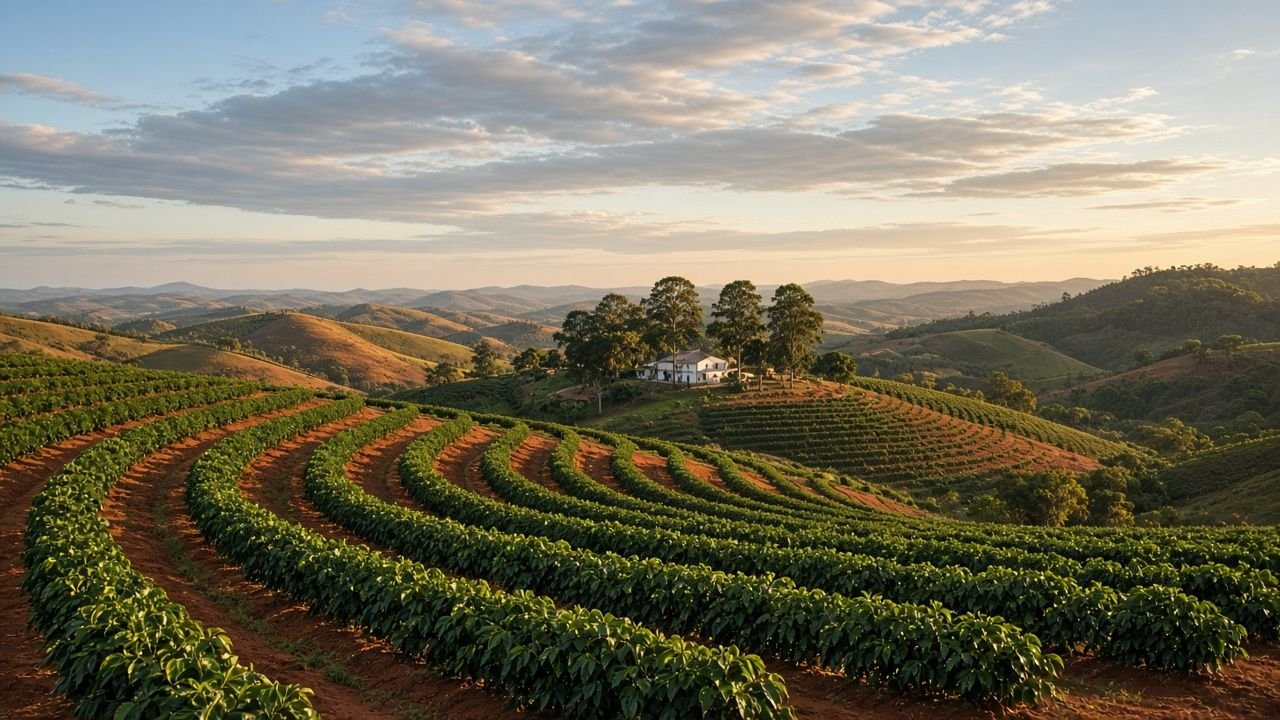
Minas Gerais
Minas Gerais grows more coffee than any other Brazilian state. In the south, Sul de Minas is a landscape of high, rolling hills and many family farms. To the west, the Cerrado Mineiro is a flatter savanna plateau with distinct wet and dry seasons, where harvests are often large and mechanised. The Matas de Minas, in the east, is hillier and greener.
São Paulo
The Mogiana region, along the border with Minas Gerais, is one of the country’s historic coffee areas. Coffee wealth helped shape the state, its railways and its cities.
Bahia
In Bahia, the highlands of the Chapada Diamantina have become known for carefully processed small lots, while the west of the state has large, irrigated farms.
Espírito Santo and the robusta belt
Espírito Santo is a major producer of robusta, known in Brazil as conilon, used widely in blends and instant coffee. Its mountains also grow arabica. Rondônia, in the north-west, is another important robusta area.
Reading a bag
Region, altitude, variety and processing method all affect flavour. Brazilian coffees are often described as nutty, chocolatey and gentle in acidity, but there is far more variety than that reputation suggests.
These are broad descriptions. Every farm, harvest and roast is different.