The journey
Cherry to Cup
A coffee bean is the seed of a fruit. Between the tree and the cup it is picked, processed, dried, sorted, shipped, roasted and ground, and every stage leaves a mark on the flavour.
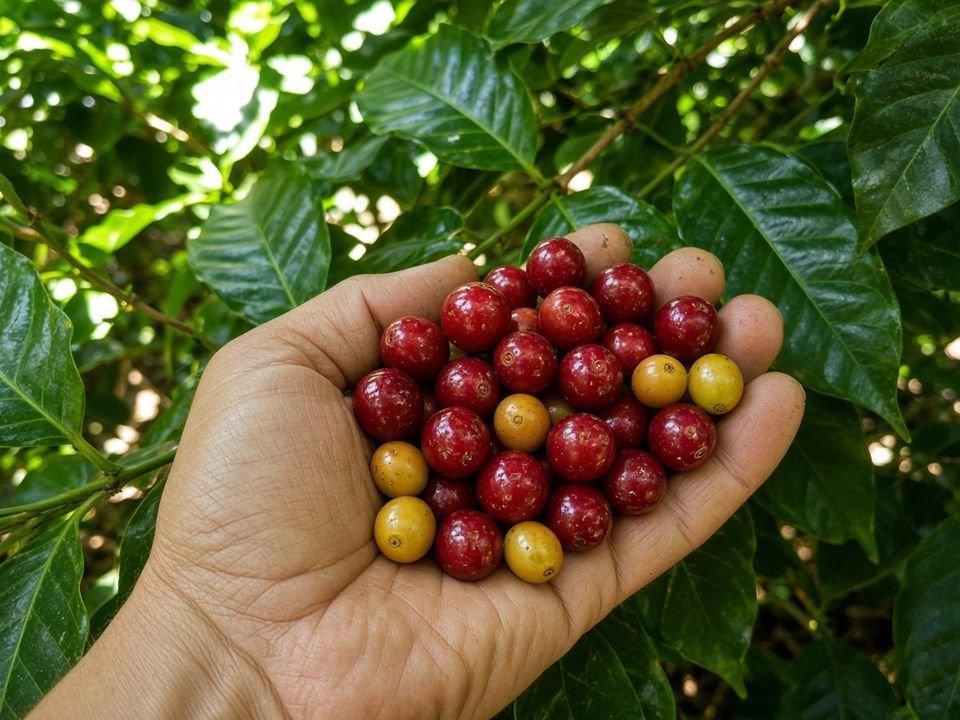
Harvest
In much of Brazil the harvest runs through the drier months, roughly from May to September. Some farms strip whole branches by hand or machine; others pick selectively, taking only ripe cherries.
Processing
The fruit must be removed from the seeds. In the natural method, whole cherries are dried with the fruit on, which can add sweetness and body. In the pulped natural method, common in Brazil, the skin is removed and the beans are dried with some of the sticky fruit still attached. Washed coffees have all the fruit removed before drying.

Drying and resting
Coffee is dried on patios, raised beds or mechanical dryers until its moisture is low enough to store safely. It then rests before being hulled, sorted and graded.
Roasting
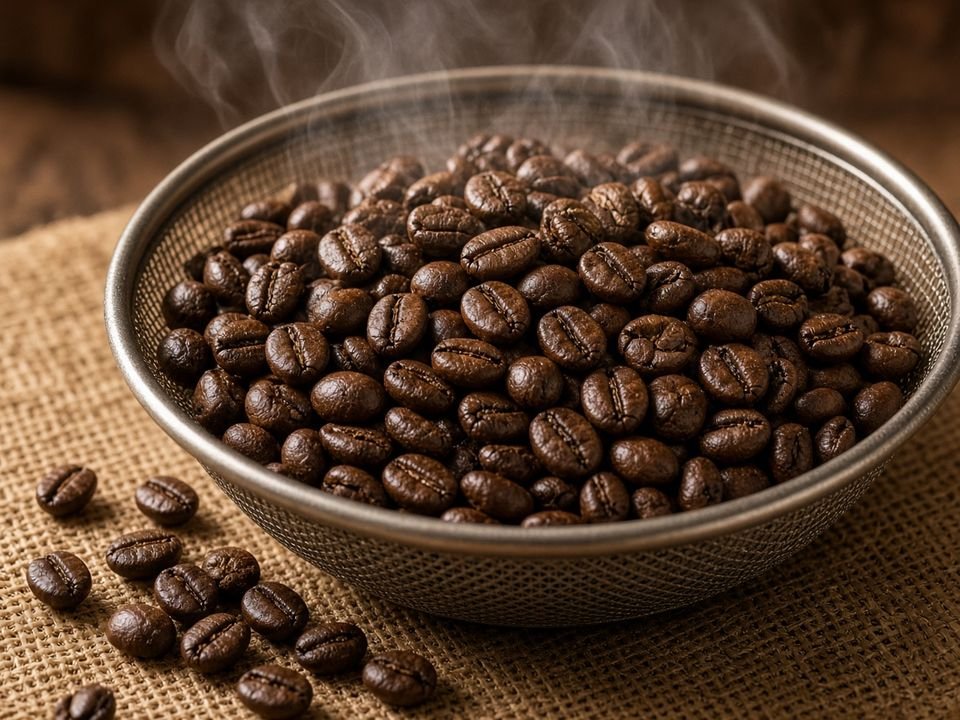
Green coffee smells grassy and has little of the flavour we know. Roasting transforms it: lighter roasts keep more of the origin’s character, darker roasts bring more bitterness and body.
Freshness
Roasted coffee is at its best within a few weeks. Store it airtight, away from light, heat and moisture, and grind only what you need.